Radio Bulgaria


Author
Albena Bezovska
News
Varvara boils it, Sava roasts it, Nikola welcomes guests
Thursday 4 December 2025 11:12
Thursday, 4 December 2025, 11:12
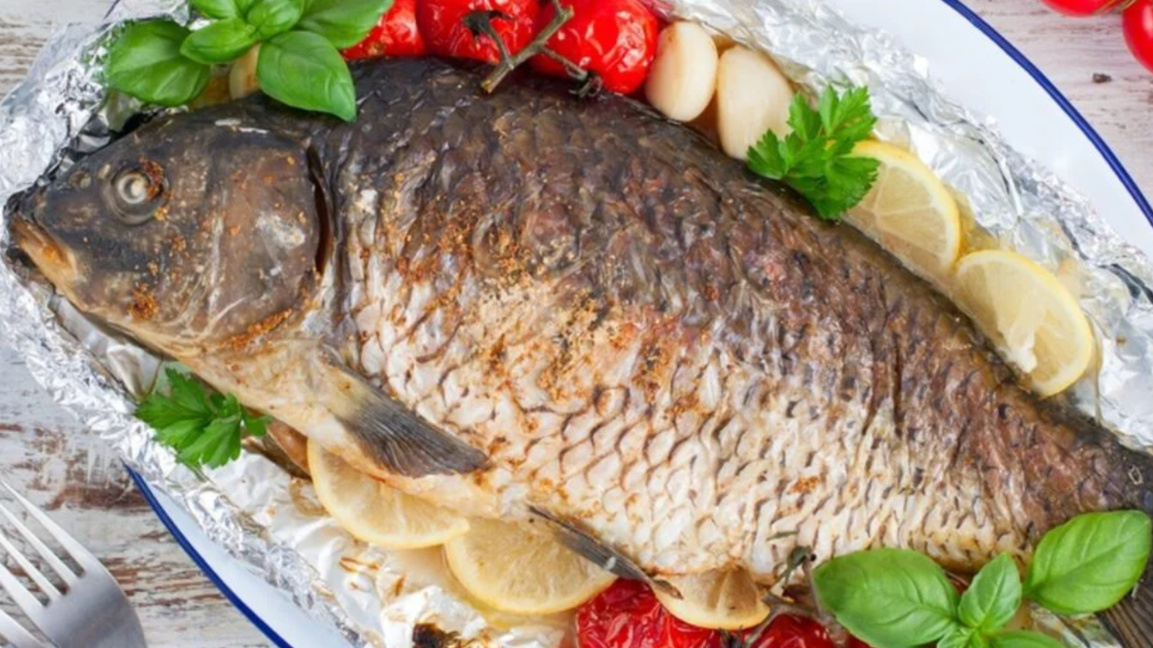
PHOTO gotvq.eu
Font size
December is a month when we celebrate one feast day after another. Studding the folk calendar like a rosary, they throw a bridge between the old and the new year, reaching right up to the January succession of name-days and rituals. Once upon a time December was called the month of St. Nikola or Nicolas because of the key church and folklore feast day dedicated to St. Nicolas, archbishop of Myra in Lycia.
Which are the most important folk customs during the days preceding St. Ignatius 's Day which marks the start of the Christmas holidays and the transition in the calendar? “Varvara boils it, Sava roasts it, Nikola welcomes guests,” goes one proverb which brings together three important feast days marking the December transition from autumn to winter. The day of St. Varvara or Barbara is also known as women’s Christmas.
On December 4 the Christian Orthodox church marks the day of the Great Martyr St. Barbara, a girl from a noble family slayed for her Christian beliefs at the beginning of the 4th century. It is believed that between the day of St. Varvara and St. Ignatius 's Day the day “rises” by one tip of a needle. And again it “rises” by as much between St. Ignatius 's and St. Vasil or Basil’s day i.e. from December 20 to January 1. On the day of St. Varvara the day and the night are equal.
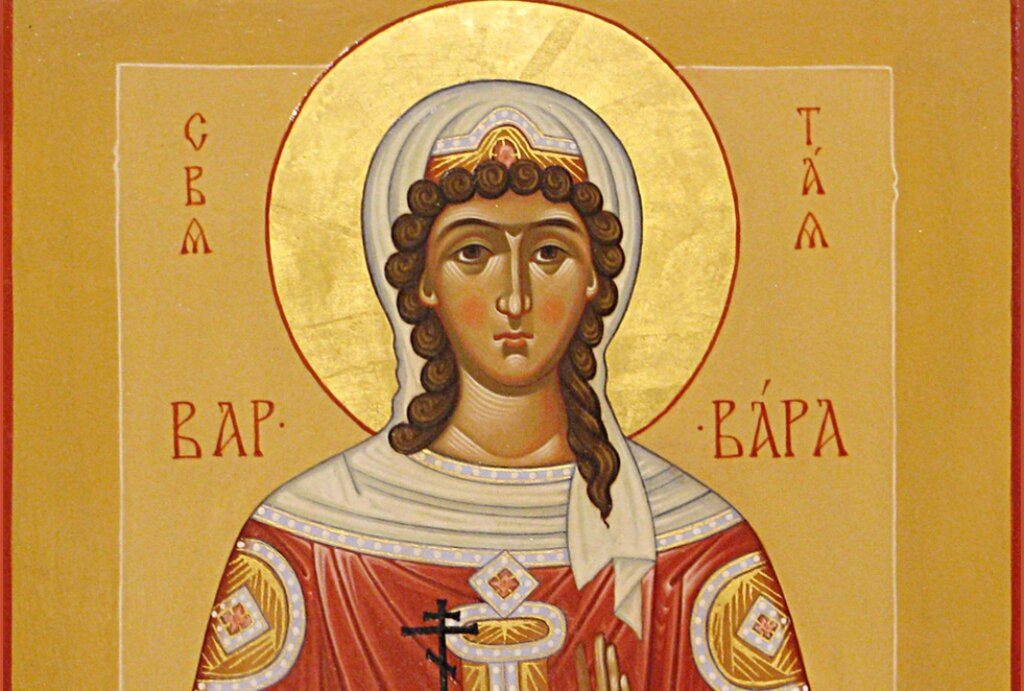
PHOTO library
In traditional beliefs Varvara
is the patron saint of childhood diseases
and most of all – of measles, popularly called Granny, Auntie,
Sweet or Honey. An evil, toothless and ugly old woman – the
portrait of the disease also paints the portrait of Varvara. To
placate Granny Measles and turn her attention away from children,
women would cook ritual pulse dishes with different wheat and bean
seeds. Sweetened with honey this dish was given to children,
neighbours and relatives. In some parts of the country it is believed
that children must jump up and down all day long so that Varvara
wouldn’t get them.
The name Women’s Christmas is most
widespread in Western Bulgaria. Lasses in their best clothes and
younger girls with pouches slung over their shoulders would go from
house to house. Just like the male carol singers, they would sing
songs blessing the home and wishing the residents health and
fertility.
Some
of Varvara’s usual practices are connected with crossroads, which
play a key role in many magic rituals. In some towns and villages
across the country women would make what are known as “bathed”
bread. The dough was made in the usual way, but was then wrapped in a
napkin, tied in a knot and submerged in hot water. The bread is ready
when it surfaces and the knot is on the underside. Women would then
stand at a crossroads and hand pieces of the bread to all passersby.
A very intriguing custom exists in Sofia region, also connected with warding off diseases. Early in the morning small children, both boys and girls would go out of doors. Each one would carry firewood and handfuls of beans, onions and spices. They would build a fire and boil the beans. Before adding the spices one of the children – the baby of the family – would take out three of the beans and place them on the knee of each of the other children. Sitting down in a circle, the children would eat the beans without touching them with their hands. After that they would be joined by other people from the village, who would also take some of the beans to add to the animal feed.
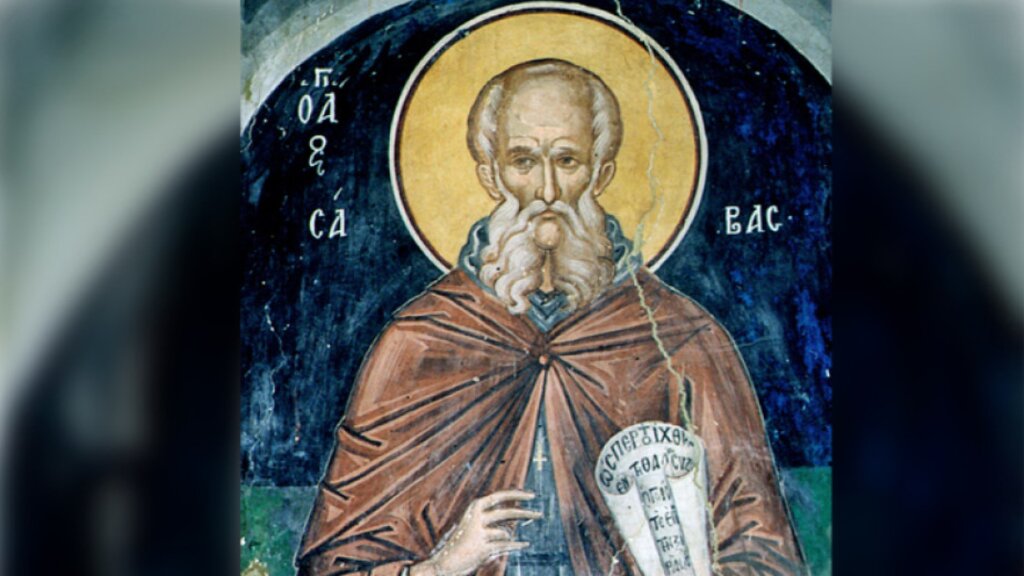
PHOTO library
St. Sava’s day is marked on December 5. In traditional beliefs Sava is most often regarded as a woman, sister to Varvara, while St. Nikola is their brother. St. Sava is the master of the plague. In some parts of the country on this day one is not supposed to touch scissors, needles or knives so as not to make the sisters angry, otherwise you may cut yourself. In other parts of the country St. Sava’s day is dedicated to the memory of the dead. Women would boil corn in memory of the dead. A fertility ritual also takes place – at sunrise the young brides who are unable to conceive would sift flour with a sieve they hold upside down. After that they would knead and bake a ritual loaf which they would then hand out at a crossroads, believing that it would turn their luck.
According to another belief Sava is a man, patron saint of wolves. In other parts of the country it is believed that both Sava and Varvara are lame wolves, limping along at the tail of the pack. One month earlier, around St. Archangel Michael’s day, the folk calendar has what are known as Wolf Days, which are accompanied by different ritual practices. St. Sava’s day would be dedicated to the patron spirit of the home. According to one of the most widespread legends the good brother Sava would always walk behind Varvara asking her not to drop hailstones onto the fields. The two of them – Sava and Varvara make preparations for the biggest holiday in December – St. Nikola’s day.
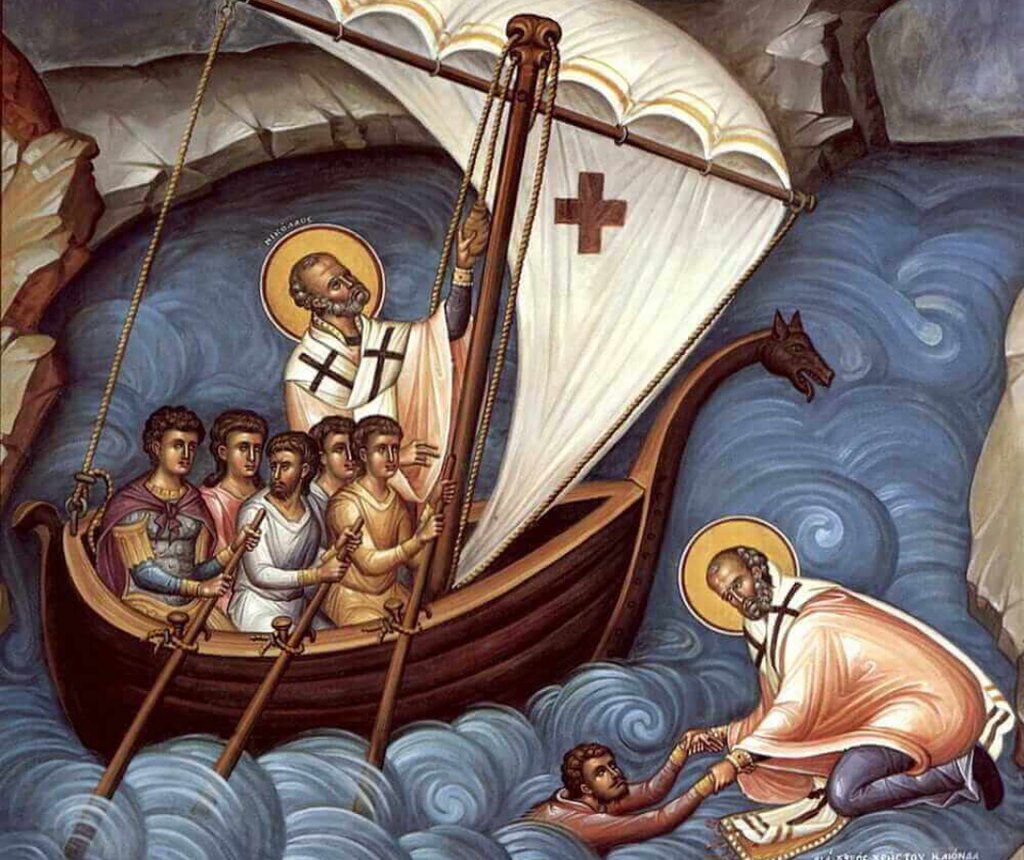
PHOTO library
Master of the rivers and the
seas, of the gales and whirlwinds, St. Nikola had the power to
release and to stop these elements.
In folklore mythology he is a winged hero who could fly up to a great
height and watch the demons of the sea. The religious holiday falls
on December 6
and is one of the few Advent days when fish is allowed. The ritual
dish prepared by each household is stuffed carp, because the saint is
the master of fish and all sea monsters. Ritual loaves, on which
different scenes are depicted are also made. St. Nikola’s day is
the most important of the three feast days and marks the beginning of
the Christmas-New Year cycle.
Photos:
gotvq.eu, library