Radio Bulgaria


Author
Ivo Ivanov
News
EU countries in the Eastern Balkans strengthen their relations in 2025
Bulgaria in the Balkans – Part One:
Monday 29 December 2025 10:11
Monday, 29 December 2025, 10:11
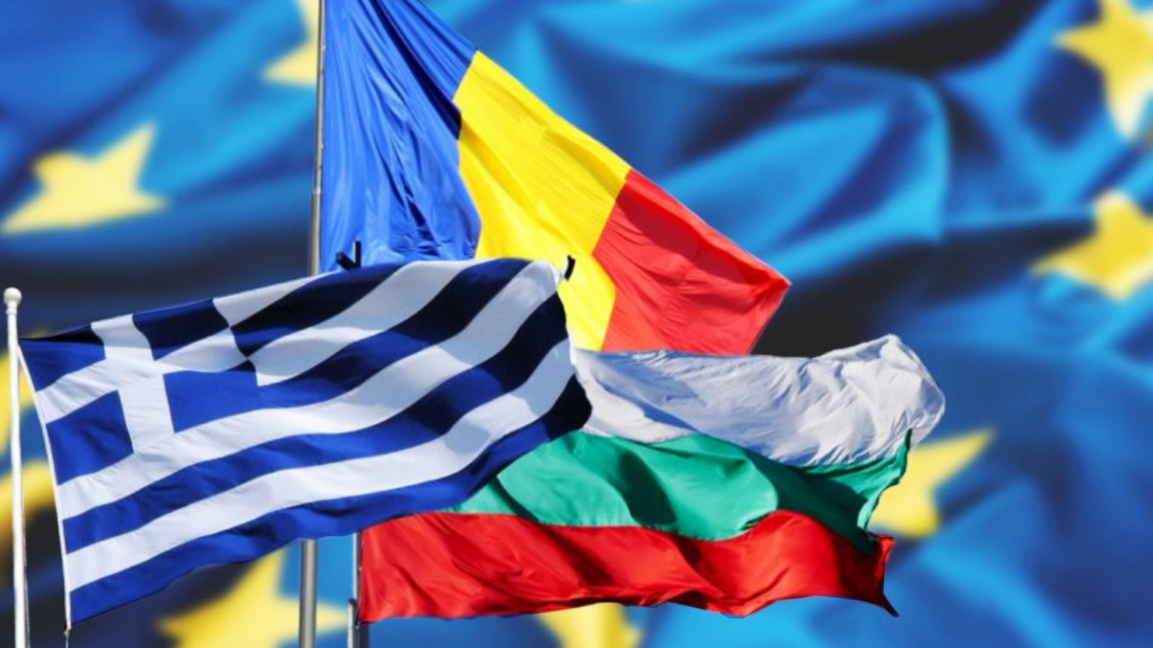
PHOTO mediamall.info
Font size
Days before the New Year, Radio Bulgaria sought
the opinion of journalists and experts on the most important event in
the south-eastern corner of Europe, assessed through the bilateral
relations between Bulgaria and its neighbours.
Bulgaria
and Greece confirm the end of all post-war reparations
At
the backdrop of military actions in the Black Sea, the EU countries –
Bulgaria, Romania and Greece, as well as Turkey, which is a NATO
ally, are actively working to preserve peace and understanding in the
Eastern Balkans. Prof. Yura Konstantinova from the Institute of
Balkan Studies at the Bulgarian Academy of Sciences points out that
the most important event in Bulgarian-Greek relations in 2025 is that
Athens and Sofia jointly declared that they no longer have mutual
reparation claims and obligations stemming from the past two world
wars in the 20th century. From Athens, where she is working on her
latest book on Greek-Bulgarian relations, Prof. Konstantinova told
Radio Bulgaria:

PHOTO balkanstudies.bg
"In my opinion, the most important event in
bilateral Bulgarian-Greek relations in 2025 is the signing on May 2
of a joint declaration by which Bulgaria and Greece confirm that on
July 9, 2024, the 60-year term of Bulgaria's obligation to supply
Greece with regulated water from the Arda River expired. Let us
recall that this Bulgarian obligation stems from the agreement signed
on July 9, 1964 for the settlement of financial issues and the
development of economic cooperation between the then People's
Republic of Bulgaria and the Kingdom of Greece. On the basis of this
agreement, the Bulgarian side paid reparations dating before World War I to World War II, including counter-claims that
arose before the signing of the agreement. Thus, for a period of 60
years, Bulgaria has supplied Greece with water from the Arda
River for the irrigation needs of Greek agriculture in the amount of
186 million cubic meters per year," the researcher says.
The
joint declaration signed on May 2, 2025, confirmed that this
Bulgarian obligation has been fulfilled. With the same declaration,
Bulgaria says it would continue to provide water from the Arda
River to the Greek side over the next 5 years, but in a volume with
parameters and according to a schedule agreed on an annual fee basis,
the professor recalls.
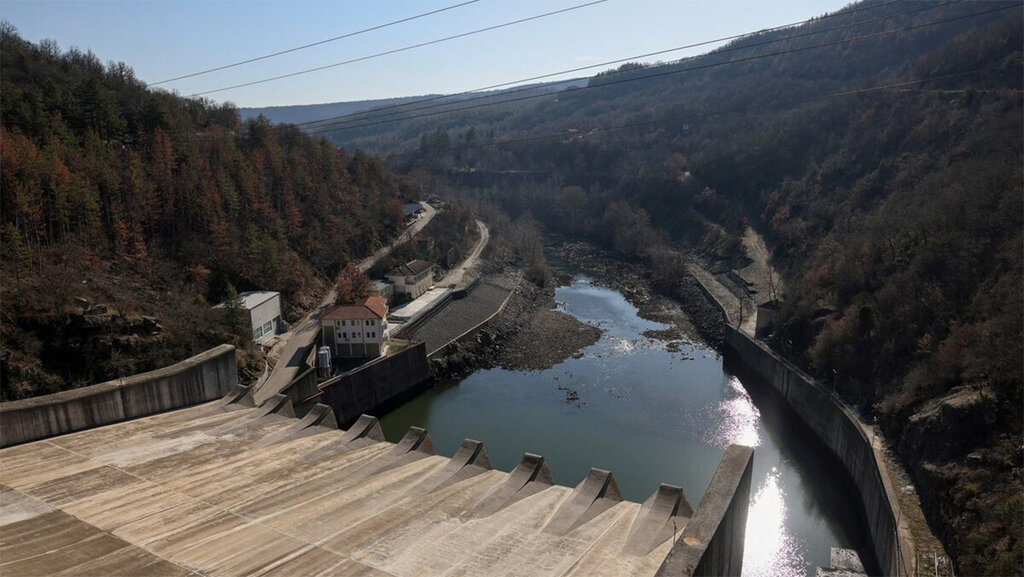
PHOTO REUTERS
In
2026, Prof. Konstantinova expects to see what the practical steps
will be for the implementation of the so-called vertical axis, which
should connect the Aegean Sea and the Black Sea. A memorandum signed
in Brussels between Greece, Bulgaria and Romania at the end of 2025
opens up opportunities for accelerated planning, financing and
construction of new railway, road, water and energy facilities
connecting the three countries. Despite the expressed political will
for concrete actions, Prof. Yura Konstantinova said that she would
not commit to predicting whether this would lead to the opening of
the already built new border crossing between Rudozem and Xanthi,
which remains closed.
Romania,
Bulgaria and Greece begin strategic connection
"Since
the war in Ukraine has begun, relations between Bulgaria and Romania
have been on an upward trend and it is no coincidence that in 2023
they were elevated to the level of strategic partnership," says
journalist and analyst Vladimir Mitev from the Romanian editorial
office of Radio Bulgaria, also author of the blog "The Bridge of
Friendship".

Vladimir Mitev
PHOTO personal archive
"Last year, an important step was that the two countries were fully accepted into the Schengen area. This year what seems most important to me comes again at the end of the year - on December 3, a memorandum was signed in Brussels between Greece, Bulgaria and Romania, which envisages the development of the transport corridor between the Black Sea and the Aegean Sea. In Bulgaria and in the region in general, this is seen as a breakthrough, as construction of new bridges is planned. A more significant and systematic development of all kinds of infrastructure connections is planned and this will probably be the next step forward in relations in our region," Mitev says and adds:
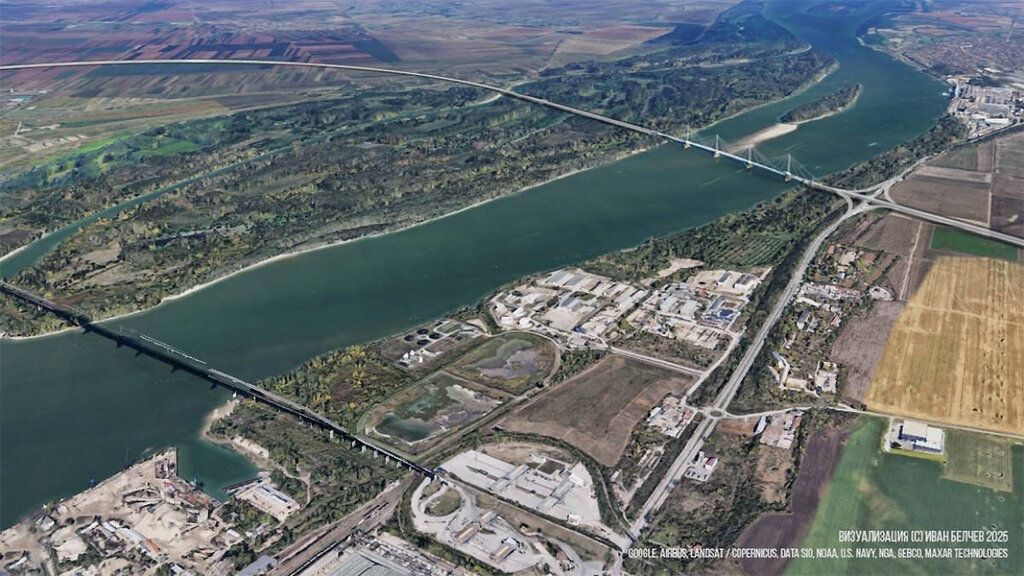
PHOTO friendshipbridge.eu
"I don't see anything strange that there
will be a second bridge built near Ruse, even though there is one.
The existing bridge is currently quite overloaded and the traffic has
been increasing for years, especially after we joined the Schengen
area. I think that Romania and Bulgaria had a dispute for a long
time, not much commented on in media, but our northern neighbour had
claims that Bulgaria was not dredging the Danube enough and that it
should join the FAST Danube 2 project, which also happened in 2025.
We see that now at the end of the year things are getting in order.
Perhaps, this is due to the fact that our Euro-Atlantic partners
really want the infrastructure in the region to develop and in this
case this works for the benefit of everyone," Vladimir Mitev
adds.
The
overview of relations between Bulgaria and its Balkan neighbours in
2025 continues on December 30 with comments on the most important
bilateral events with Turkey, Serbia and North Macedonia, provided by
journalist Mehmed Yumer, Dr. Biser Banchev and the doyen of the
Bulgarian media community in North Macedonia, Vladimir Perev.
This publication was created by: Alexander Markov