Radio Bulgaria


Author
Krasimir Martinov
Article
Father Maxim from Kykkos Monastery: “Where there is faith, there are miracles!”
Thursday 25 December 2025 14:05
Thursday, 25 December 2025, 14:05
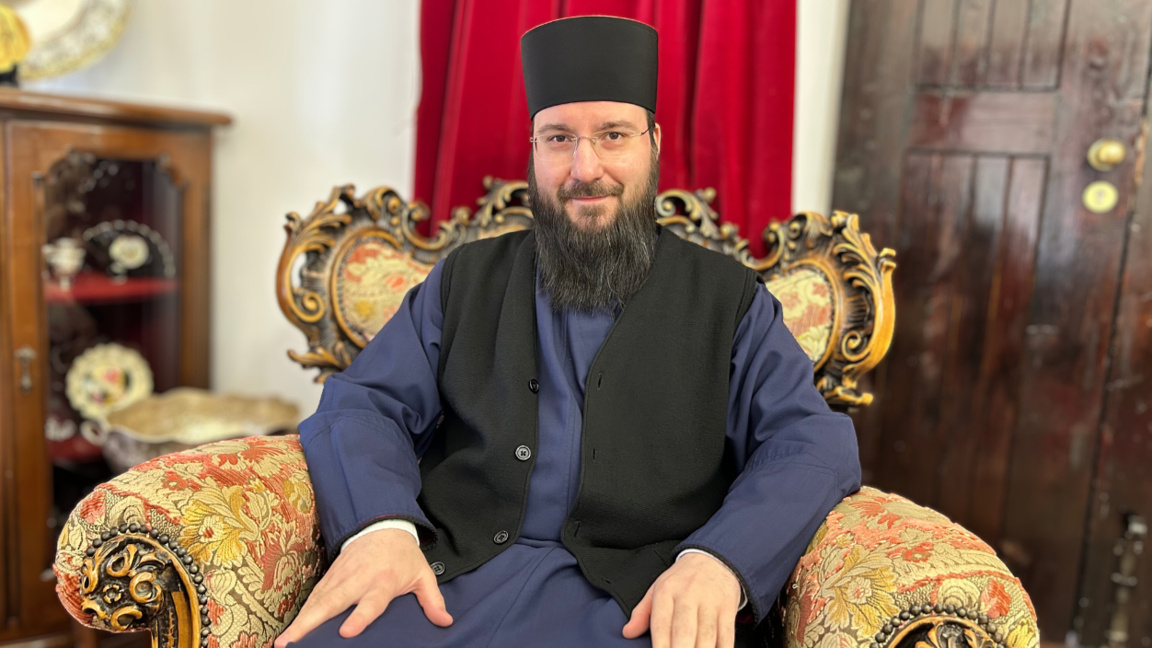
PHOTO Krasimir Martinov
Font size
Kykkos Monastery, located in the western part of the Troodos Mountains at an altitude of 1,318 meters, is one of the richest and most famous monasteries in Cyprus. The holy monastery was founded in the 11th century by the Byzantine emperor Alexios I Komnenos. At Kykkos Monastery, in 1926, the first President of Cyprus - Archbishop Makarios (1960–1974) - began his church service as a novice. The abbot of the monastery since 1985 has been Nikiforos.
Today, pilgrims from all over the world flock there every day to pray before the famous miraculous icon of the Holy Mother of God Eleousa (Tenderness).
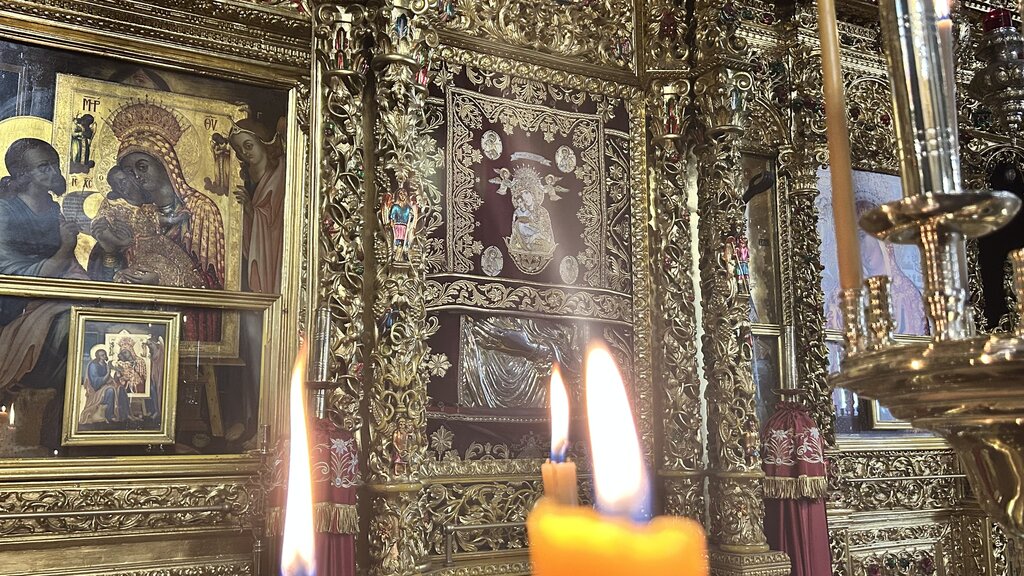
Icon to the Holy Theotokos Eleusa in Kykkos Monastery, Cyprus
PHOTO Krasimir Martinov
A team from Radio Bulgaria visited the monastery and spoke with its steward, Father Maxim, who himself is deeply connected to Bulgaria and the Bulgarian community in Cyprus. He is Bulgarian on his father’s side and Cypriot on his mother’s, a graduate of Plovdiv University “Paisii Hilendarski”. He also teaches religious education at the Bulgarian Sunday School “Rodna Stryaha” in Cyprus.
The icon that is the patron of the monastery is also said by people to be miraculous. What does its miracle-working power consist in, we ask Father Maxim?

Father Maxim
PHOTO Krasimir Martinov
“I have always been of the opinion that when a person has faith, everything can be miraculous,” he says. “Of course, this icon has grace - great grace. The Mother of God herself commissioned and blessed the icon - this one and two others that are in Greece. A person wants an image in order to see. Without an image, one begins to lose faith, to lose feeling. And it is no coincidence that it is said, ‘Eyes that are not seen are forgotten,’ or ‘This is love at first sight.’ And when you see an icon, you feel a strong energy. And that energy is like a magnet for the pain of the people who constantly come here and pour out their suffering. And all this sorrow poured out before the icon is the pain that makes both the icon and this place strong. Faith is what moves the Orthodox Church. If there is faith, there will be miracles. That is the most important thing, in my opinion.”
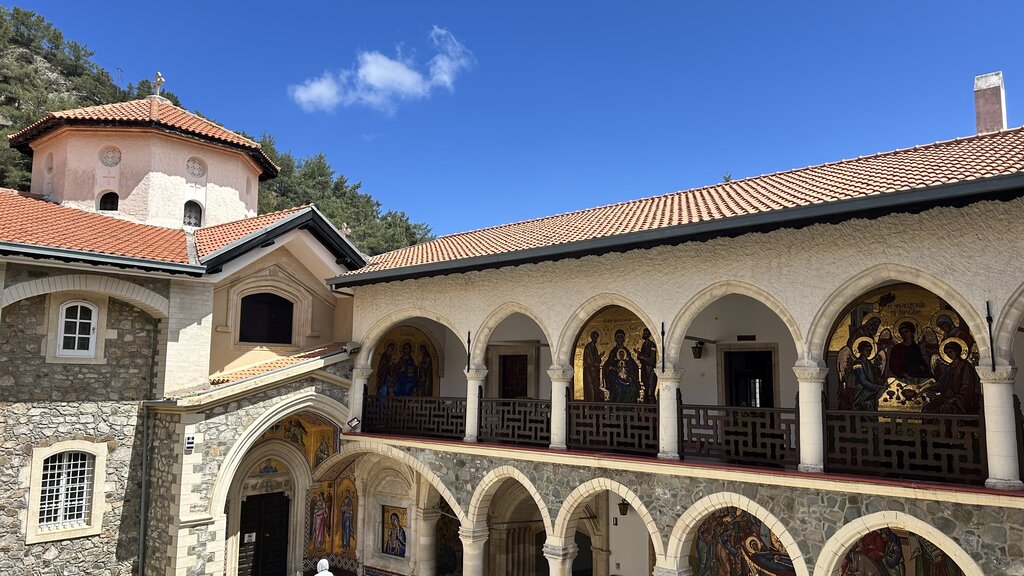
Kykkos Monastery - a view of the courtyard
PHOTO Krasimir Martinov
How do you assess our present time? Are people good or bad? What prevents them from being more united and, accordingly, from having no poverty, no wars - everything from which modern humanity suffers?
“People are good. God created man as something good,” says Father Maxim. “In the beginning, there was goodness. But because of our sins, what is happening in today’s world darkens the purity and the truth in which we are meant to live. The farther we are from God, the more unhappy we will be - and the more confused. If there is no God in our lives, if there is no repentance, there is no love. Many of today’s young people and people in general love - at least they think they love - themselves. That is, today the ego works much more. And when it operates on a large scale, it creates a large-scale negative icon. That is why we see that today’s leaders do not have wise thinking, do not have pure thinking. Because they perceive themselves as if they are living in a jungle - what matters is who will overpower whom, who will gain more. Sins are the cause of our unhappiness. Our soul suffers from sins, and when the soul suffers, the body suffers as well.
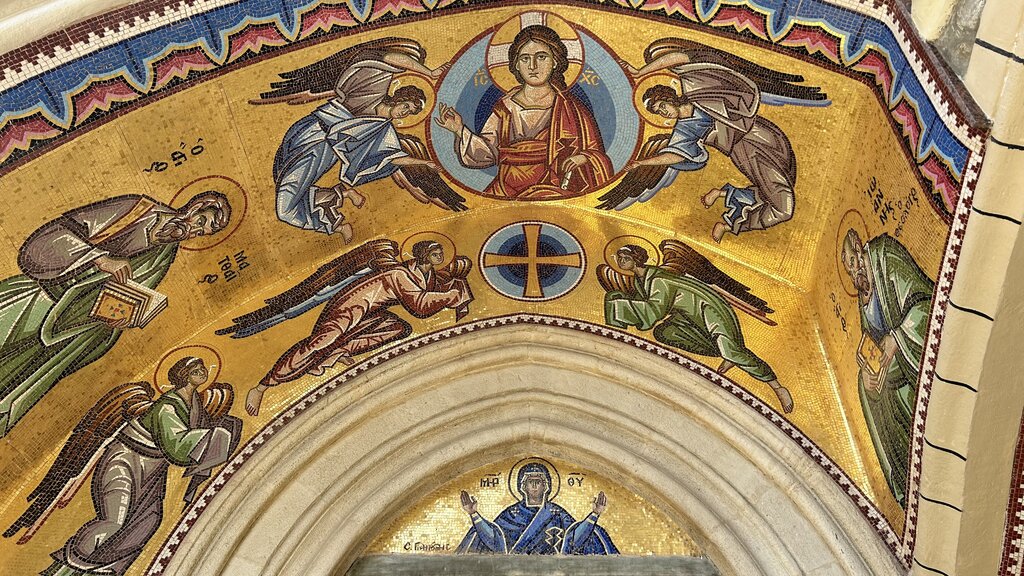
Mural from Kykkos Monastery, Greece
PHOTO Krasimir Martinov
Unfortunately, people today do not seek God. They occupy themselves with everything else - bodybuilding, yoga, various philosophical teachings - but they do not turn to God. Why? Because they think they can do everything themselves. God asks only one thing of us - repentance. He wants us to knock on His door; He wants humility. When you knock on God’s door, God reveals Himself to you, opens the door, embraces you. Today many people are ashamed to say they believe, because a torrent of criticism pours down on them. But when a person believes, their life changes. We should not be ashamed of God. We should not think about our economic or career development, but about how we can please God. That is my advice to people today.”
But what will this give them? They will ask: “All right, I will turn to God, but will God help my endeavors?” After all, each of us works, takes care of a family, often of a sick person at home as well. In what way can a person truly learn to ask all this of God?
“Well, it’s very simple,” Father Maxim asserts. “The burden you carry with you when you do not turn to God tires and destroys you. When you turn to God, the burden falls away, because you leave everything in His hands. That is how your life and your thinking change.
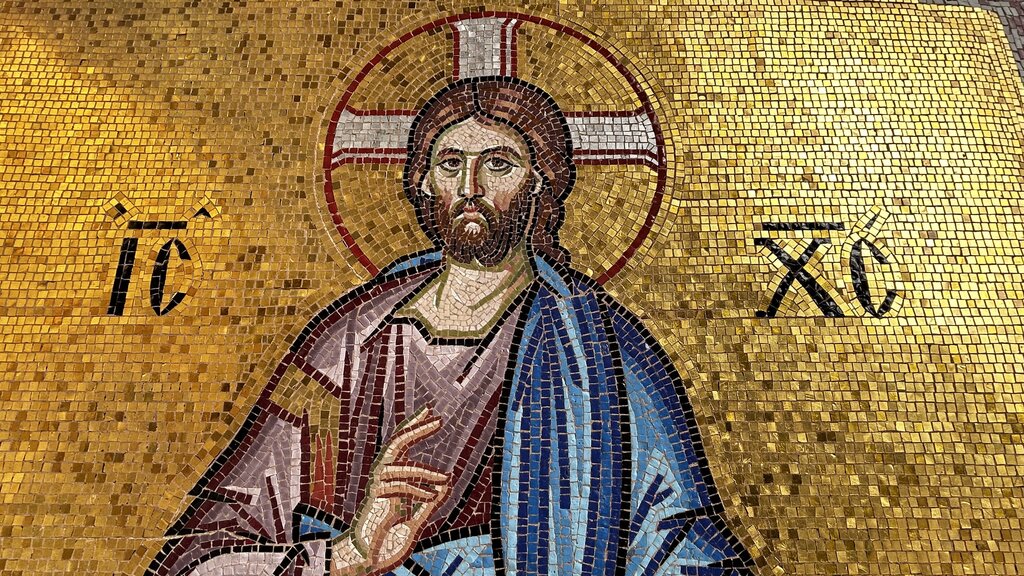
Mosaic, Kykkos monastery, Cyprus
PHOTO Krasimir Martinov
Of course, there will be problems, temptations, and passions - but it will be much easier for us to cope with them. I am not saying you must constantly be in church praying. I am saying you must have communion with God, have contact with Him, talk to Him. Prayer is communion with God. Just as you and I are communicating now, so should we do with God. It is not necessary to wait for difficult moments and only then turn to Him. God, of course, is love. He will open His door to everyone, as long as it is not too late. And when does it become too late? When a person dies. If a person wants to live happily, let them turn to God. Strive to become as pure as snow, as it is said in the Bible, Psalm 50.”
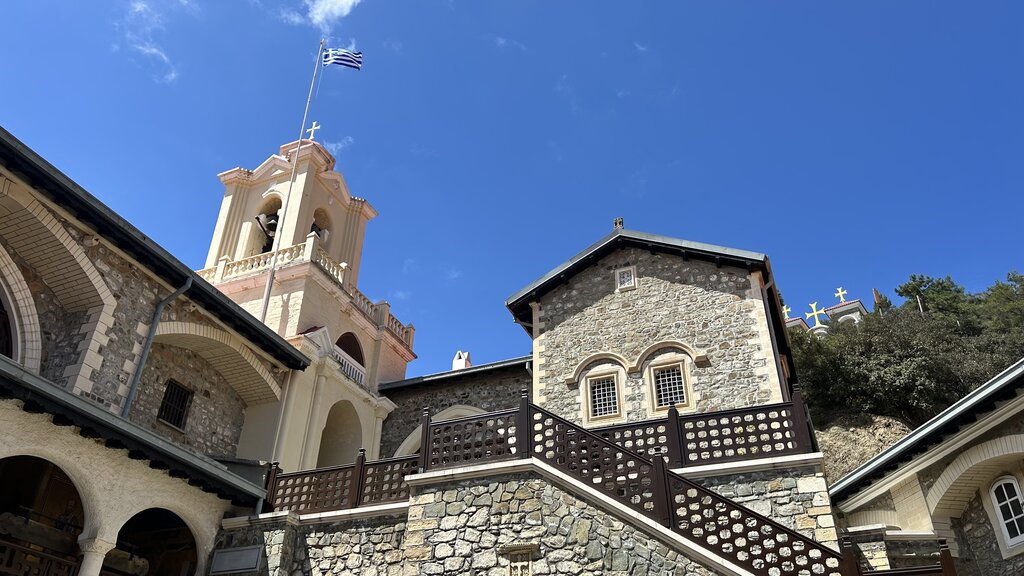
Kykkos monastery in Cyprus
PHOTO Krasimir Martinov
Expect a continuation of our conversation with Father Maxim from Kykkos Monastery. In it, we reveal interesting facts from the history and present of the holy monastery, build a kind of bridge between Orthodox Christians and their hierarchs from Bulgaria and Cyprus, and talk about religious education and the role of the Church in the development of modern societies.
Photos: Krasimir Martinov
English version: R. Petkova
This publication was created by: Rositsa Petkova